
Table of contents
- What is Video Borescope?
- How a Video Borescope Works
- Articulating vs. Non-Articulating Borescopes
- Flexible vs. Rigid vs. Semi-Rigid: Exploring Video Borescope Probe Options
- Key Features & Benefits of Modern Video Borescopes
- Explore OME-TOP’s Signature Video Borescope
- OME-TOP Featured Product Models
- Service Support & Equipment Lifecycle Options
- Applications of Video Borescopes Across Industries
- 6 Key Guidelines for Proper and Safe Video Borescope Use
- Video Borescope-FAQs
What is Video Borescope?
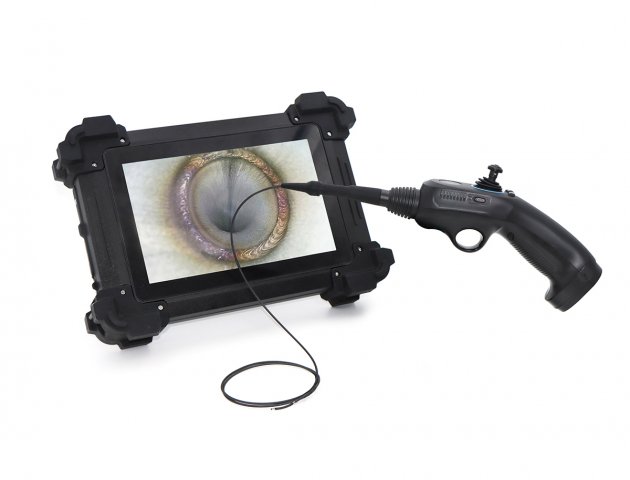
A video borescope, sometimes referred to as an “inspection camera,” uses a digital camera at the end of a flexible tube to capture video or still images inside engines, pipe systems, industrial equipment, and other dark or confined spaces. Available in both articulating and non-articulating models, the probe tip often includes integrated LED lighting to illuminate the inspection area. As a remote visual inspection tool, it offers notable advantages including real-time display viewing, image/video capture, joystick-controlled articulation, adjustable illumination, and USB or wireless connectivity. These features make video borescopes especially valuable for routine inspections across engines, turbines, boilers, manufacturing systems, and infrastructure applications.When choosing a borescope, the following factors need to be considered:
- Articulation
- Portability
- Image capture requirements (still images or video)
- Magnification
- Diameter
- Length
- Direction and field-of-view
- Illumination
- Power source
How a Video Borescope Works
A video borescope operates through a miniature camera and LED illumination embedded at the tip of a flexible or rigid insertion tube. The camera captures real-time images and transmits digital video signals to a display monitor. Compared with traditional optical borescopes, video borescopes deliver higher-resolution imaging, improved sensitivity, and enhanced documentation functionality. This modern design significantly increases inspection accuracy and efficiency in both field and factory environments.Articulating vs. Non-Articulating Borescopes
There are two primary categories of video borescopes: articulating and non-articulating.- Articulating borescopes allow the probe tip to bend in multiple directions, creating superior control when navigating around corners or complex geometries.
- Non-articulating borescopes maintain a fixed straight design and are ideal for straightforward inspections without directional changes.
Flexible vs. Rigid vs. Semi-Rigid: Exploring Video Borescope Probe Options
Selecting the correct video borescope probe type is essential for achieving accurate and efficient inspection results, as each probe structure behaves differently in confined or complex environments—and probe diameter further determines whether the device can physically access small openings or maintain image quality in larger cavities. Rigid video borescope probes provide high optical stability and mechanical durability, making them suitable for straight-line inspections where the access path does not involve bends or obstructions. Their typically larger diameters also support superior lens clarity and structural strength.Flexible video borescope probes utilize braided or soft-metal constructions combined with an integrated camera sensor to deliver real-time video feedback while navigating curved, obstructed, or complex pathways inside machinery or piping systems. Smaller-diameter flexible probes allow entry into tight apertures, while mid-diameter configurations offer a balance between maneuverability and image resolution.
Semi-rigid video borescope probes combine controlled stiffness with limited bendability, enabling precise insertion into narrow, linear passages—such as conduit channels, wiring routes, or small-diameter tubing—where flexible probes may over-bend and rigid probes may not fit. Their moderate diameters make them practical for tasks requiring both stability and slight directional adjustment.
Understanding the functional differences—and the role of probe diameter—helps technicians select the video borescope configuration that best aligns with the inspection environment, improving both diagnostic precision and operational safety.
Key Features & Benefits of Modern Video Borescopes
Modern video borescopes include a range of advanced capabilities designed for industrial use. Key features include high-resolution cameras, adjustable LED illumination, optional articulation control, interchangeable tubes, video recording, and still-image capture. These functions help technicians diagnose abnormalities quickly while maintaining detailed inspection records for maintenance or compliance reporting.To further improve inspection accuracy, modern systems incorporate advanced imaging enhancements such as high-dynamic-range processing, improved noise suppression, and enhanced sensor sensitivity to deliver clear visuals in low-light or high-contrast environments. Some professional-grade solutions also support 3D measurement, point-cloud reconstruction, or precision defect sizing, allowing technicians to quantify crack length, corrosion depth, or wear conditions with higher reliability.
Beyond optical performance, workflow efficiency is strengthened through menu-guided inspections, automated file tagging, wireless synchronization, and structured reporting tools. These features streamline documentation, reduce manual errors, and help maintain traceability throughout the inspection process.
For demanding field environments, modern video borescopes often incorporate reinforced constructions engineered to withstand shock, vibration, dust exposure, and moisture ingress. Durable housings, sealed controls, and impact-resistant materials enhance reliability during outdoor, industrial, or high-usage operations—even when formal ruggedization ratings vary across different models.
Explore OME-TOP’s Signature Video Borescope
Each OME-TOP video borescope combines HD optics, multi-directional articulation, and rugged tungsten insertion tubes to meet diverse inspection requirements. With wireless functionality, ergonomic design, and optional dual-view cameras, our borescopes ensure both convenience and accuracy. Trusted by global professionals for over 25 years, OME-TOP offers versatile video borescope solutions that balance quality, mobility, and cost-efficiency.OME-TOP Featured Product Models
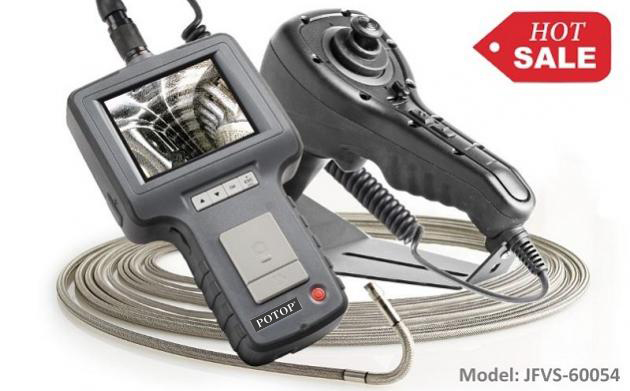
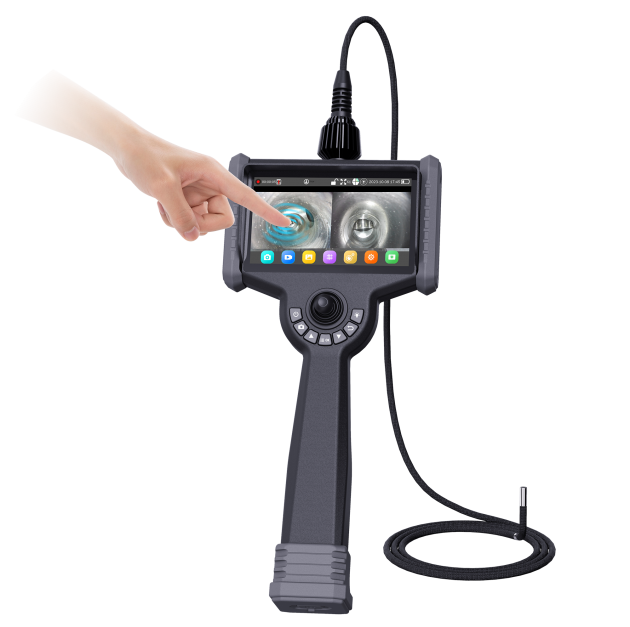
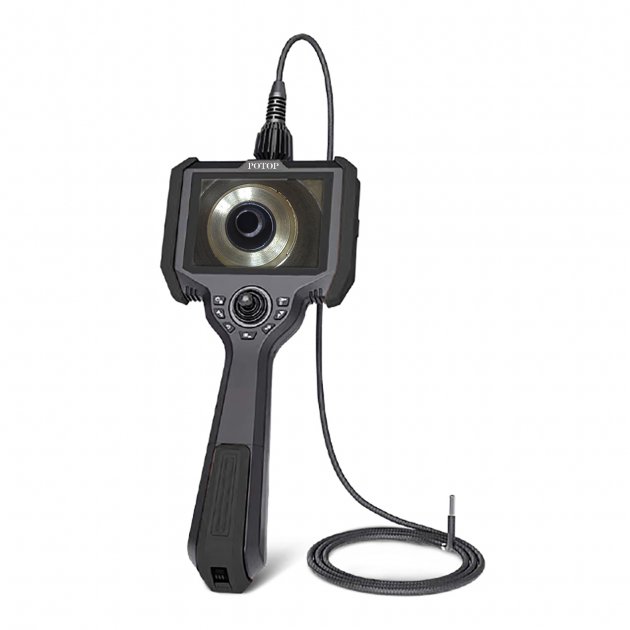
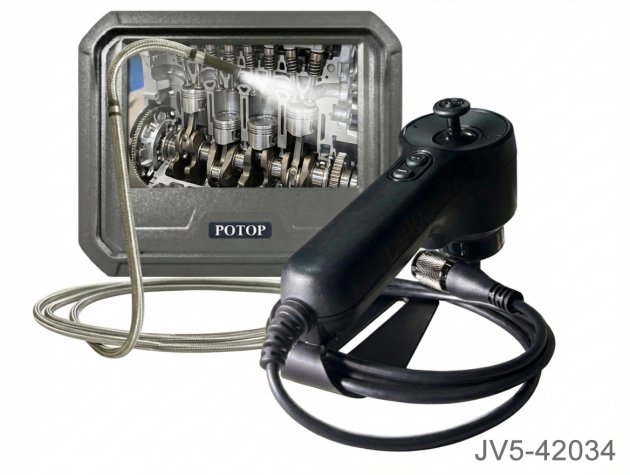
Below are a few standout OME-TOP video borescope systems that demonstrate our commitment to precision, durability, and innovation.Ready to find the right video borescope for your application? Discover full product details on our official product page.
start here
| Video Borescope | Description | Key Features |
|
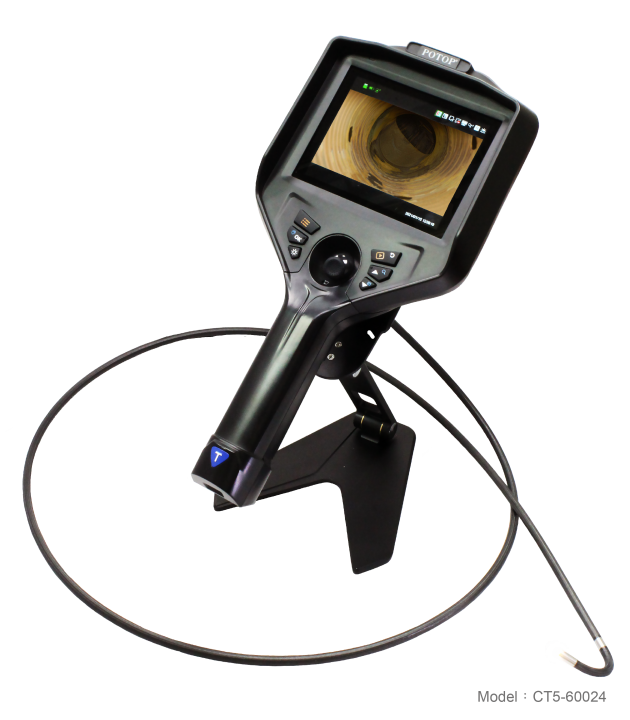
CT Series 5.1" HD Video Borescope Tungsten Probe 360°
|
|
|
|
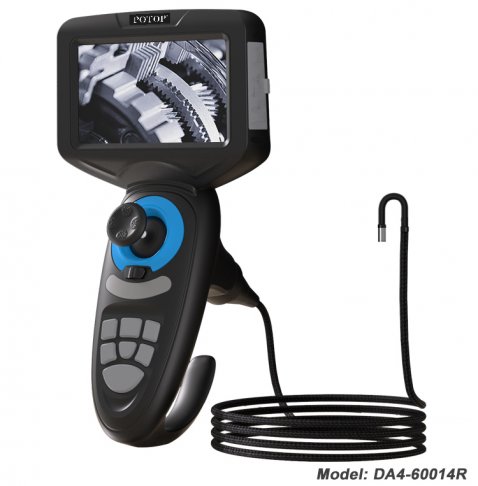
DA4 Series 4.5" HD Video Borescope Tungsten Probe 360°
|
|
|
JF Series 3.5" Handy Video Borescope Inspection Camera
|
|
SEE MORE |
|
CK6 Series 6"Full HD Video Borescope Tungsten Probe 360°
|
|
|
|
CK5 Series 5" HD Video Borescope Tungsten Probe 360°
|
|
|
|
JV5 Series 5"HD Professional Video Borescope Camera
|
|
|
|
CP Series 5" HD Video Borescope Tungsten Probe 360°
|
|
|
|
JS5 Series 5" HD Video Borescope Tungsten Probe 360°
|
|
|
|
KM10 Series 10" HD Video Borescope Tungsten Probe 360°
|
|
|
 JK Series 7" Professional Video Borescope Camera 360°
|
|
|
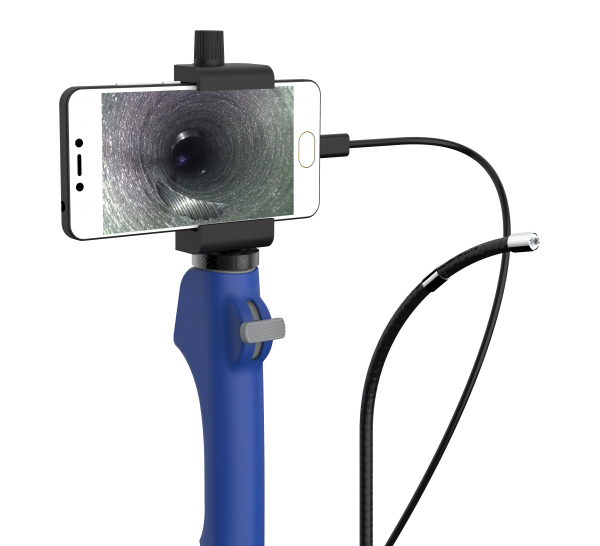 TOC Series Smart Mobile Phone Borescope
|
|
|
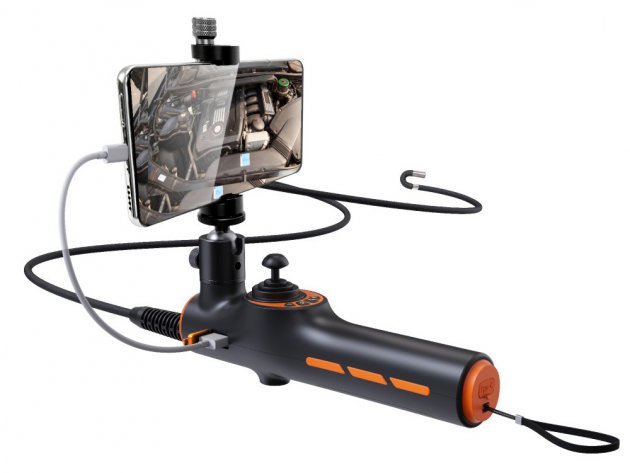 CC Series Smart Mobile Phone Borescope
|
|
|


Service Support & Equipment Lifecycle Options
Maintaining long-term performance is an important consideration when selecting a video borescope. To support ongoing reliability, many industrial-grade systems are paired with optional lifecycle services such as periodic calibration, preventative maintenance, and operator training. These programs help ensure consistent imaging performance and reduce unexpected downtime during mission-critical inspections.Some providers also offer equipment rental or short-term deployment options, giving organizations flexibility when managing fluctuating inspection workloads. These service and lifecycle support models help teams maintain operational continuity, extend equipment lifespan, and optimize total cost of ownership in demanding industrial environments.
Applications of Video Borescopes Across Industries
Video borescopes play a central role in non-destructive inspection, allowing technicians to assess internal components in confined or inaccessible spaces without dismantling equipment or interrupting operations. Their ability to deliver real-time visual diagnostics makes them indispensable across multiple technical fields.Key Industry Applications
- Automotive
- Engine cylinder and piston inspections
- Valve, injector-seat, and combustion-chamber evaluations
- Transmission housing checks and exhaust-channel diagnostics
- Aerospace
- Turbine blade inspections and cooling-channel assessments
- Foreign-object damage (FOD) detection
- Internal component diagnostics with optional measurement tools for wear quantification
- Plumbing & Pipework
- Blockage identification and obstruction tracing
- Corrosion monitoring and crack detection
- Post-repair verification within complex pipe networks
- Manufacturing & Industrial Machinery
- Internal machinery inspections without teardown
- Tool wear evaluation and mold cavity alignment
- Detection of machining defects in narrow or deep geometries
- Energy & Power Generation
- Boiler tube inspections and weld condition assessments
- Heat-exchanger spacing evaluations
- High-temperature structure monitoring in turbines and process equipment
6 Key Guidelines for Proper and Safe Video Borescope Use
Industrial video borescopes are indispensable for non-destructive inspections across aerospace, automotive, energy, and manufacturing fields. However, ensuring safety and equipment integrity is crucial during every videoscope inspection. Below are six key points to follow:
- Never use a video borescope on humans or animals — these tools are strictly for industrial applications, not for medical or veterinary use.
- Avoid operating around active machinery or live electrical equipment — inspections should only be performed on powered-off systems to prevent electric shock or mechanical damage.
- Keep away from hazardous environments — do not use or store your video borescope in explosive, high electromagnetic, or flammable atmospheres, as it may trigger fires or system malfunctions.
- Handle the probe with care — avoid over-bending, twisting, pulling, or coiling the insertion tube, as it may lead to internal wire damage, short circuits, or fire hazards.
- Protect your vision and the lens — never stare directly into the probe's LED light, and ensure proper lighting control during use to avoid glare and eye strain.
- Maintain and clean after use — always clean the tip of your video borescope after each inspection, and avoid exposing it to incompatible liquids to prevent corrosion or performance degradation.
Following these practices not only ensures operator safety but also extends the lifespan and reliability of your industrial video borescope system.
Video Borescope-FAQs
1. What is a video borescope and how is it different from a traditional borescope?
A video borescope is an advanced inspection tool equipped with a camera and a built-in display screen. Unlike traditional optical borescopes, video borescopes capture digital images and videos, allowing for real-time viewing, recording, and documentation during inspections.
2. In what industries or applications is a video borescope commonly used?
Video borescopes are widely used across industries such as aerospace, automotive maintenance, HVAC, plumbing, and manufacturing. They help inspect tight or hard-to-reach areas like engine cylinders, pipelines, turbines, and gearboxes without disassembly.
3. How do I choose the right video borescope probe diameter and length?
Choosing the correct probe depends on the size and depth of the inspection area. For narrow or curved spaces, a small diameter (1.8mm–4mm) and flexible insertion tube are ideal, while longer probes (1–3 meters or more) are suitable for deep or complex structures.
4. What features should I look for in a high-quality video borescope?
Key features to consider include HD image resolution, dual-camera or side-view capability, multi-angle articulation, wireless connectivity (Wi-Fi), recording functions, and rugged design with waterproof (IP67 or higher) protection.
5. Can I use a video borescope with my phone or computer?
Yes. Many modern video borescopes support Android or Windows systems and come with apps or USB/Wi-Fi connection options, enabling you to view and save inspection footage directly on your device.
6. What is a video borescope used for?
A video borescope is used to inspect hard-to-reach spaces without disassembling equipment. It provides real-time video to diagnose internal conditions in engines, turbines, pipes, and industrial machinery.
7. What is a videoscope used for?
A videoscope is used across various industries—including automotive maintenance, aerospace inspection, plumbing, manufacturing, and facility management—to capture high-quality internal images and videos for documentation, maintenance planning, and routine condition monitoring.
8. What is the difference between a borescope and a videoscope?
A borescope may be optical or digital, while a videoscope specifically uses a digital camera to capture high-resolution video. Videoscopes typically offer better clarity, LED lighting, and recording capabilities.
9. What are the two main types of borescopes?
The two primary types are articulating and non-articulating borescopes. Articulating probes bend for improved viewing angles; non-articulating models remain straight for simple access paths.